LANGUAGES AND LINGUISTICS
e-mail: veromich_1289@hotmail.com
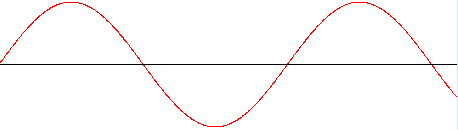
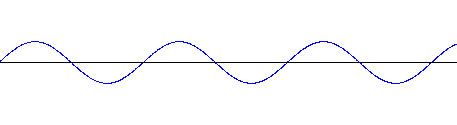
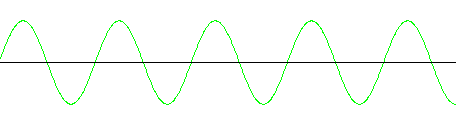
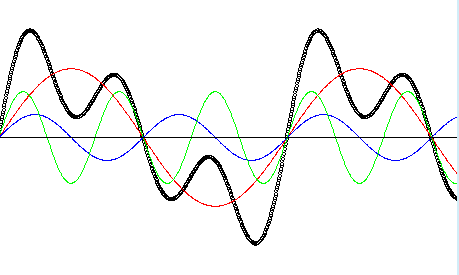
| Component wave | Frequency | Amplitude |
| A | 100 Hz | 30 dB |
| B | 200 Hz | 10 dB |
| C | 300 Hz | 20 dB |
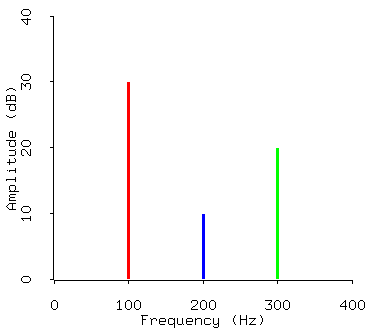

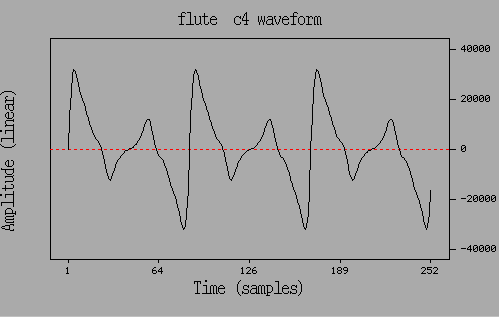
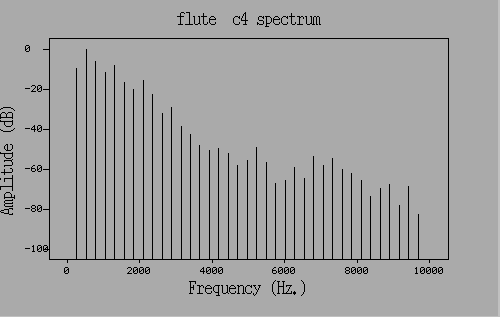
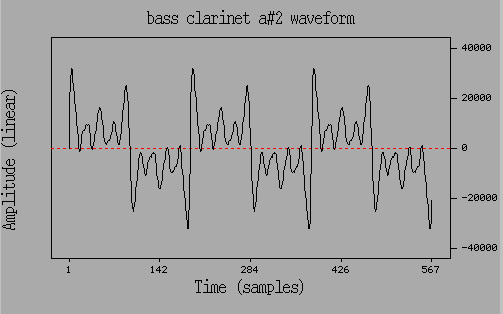
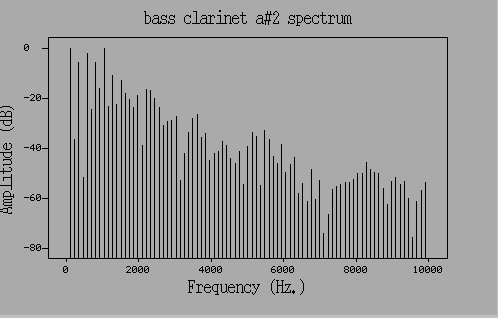
 Don't confuse these spectrum diagrams with spectrograms (which we'll cover later).
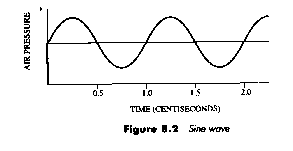
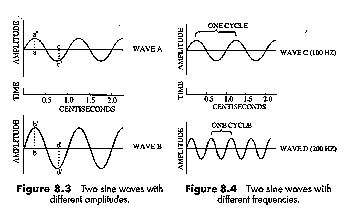 Wavelength is the converse of frequency: the shorter the wavelength, the higher the frequency; the longer the wavelength, the lower the frequency. (Sound will move at the same speed, about 330 metres per second. So if you want to double the frequency of a wave, you'll have to fit twice as many wavelengths into that 330 metres, and each wavelength will have to half as long.)
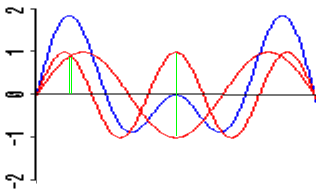 300 Hz
 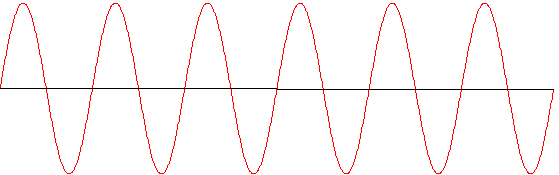 500 Hz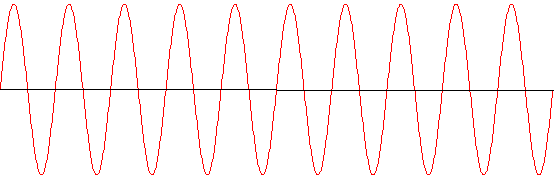
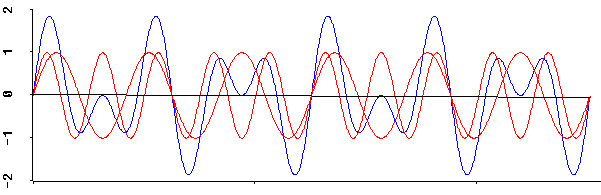
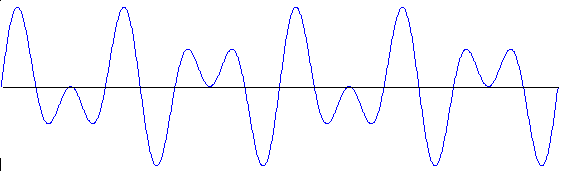 300 Hz and 2000 Hz added 900 Hz and 1100 Hz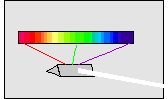
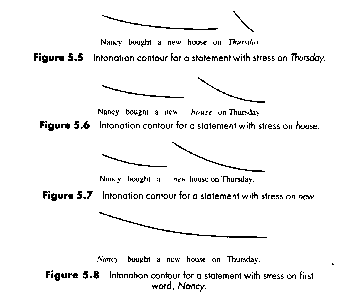
reading the one language with the intonation pattern appropriate to the other can give rise to entirely unintentional effects: English with Russian intonation sounds unfriendly, rude or threatening, to the native speaker of English; Russian with an English intonation sounds affected or hypocritical to the native speaker of Russian.
Comrie (1984); "Interrogativity in Russian"
|
Word
|
Dropped syllable
|
|
aspirin
|
as-prin
|
|
average
|
av-rage
|
|
Barbara
|
Bar-bra
|
|
business
|
bus-ness
|
|
camera
|
cam-ra
|
|
different
|
dif-rent
|
|
evening
|
eve-ning
|
|
every
|
ev-ry
|
|
family
|
fam-ly
|
|
favorite
|
fav-rite
|
|
federal
|
fed-ral
|
|
general
|
gen-ral
|
|
interest
|
in-trest
|
|
Margaret
|
Mar-gret
|

